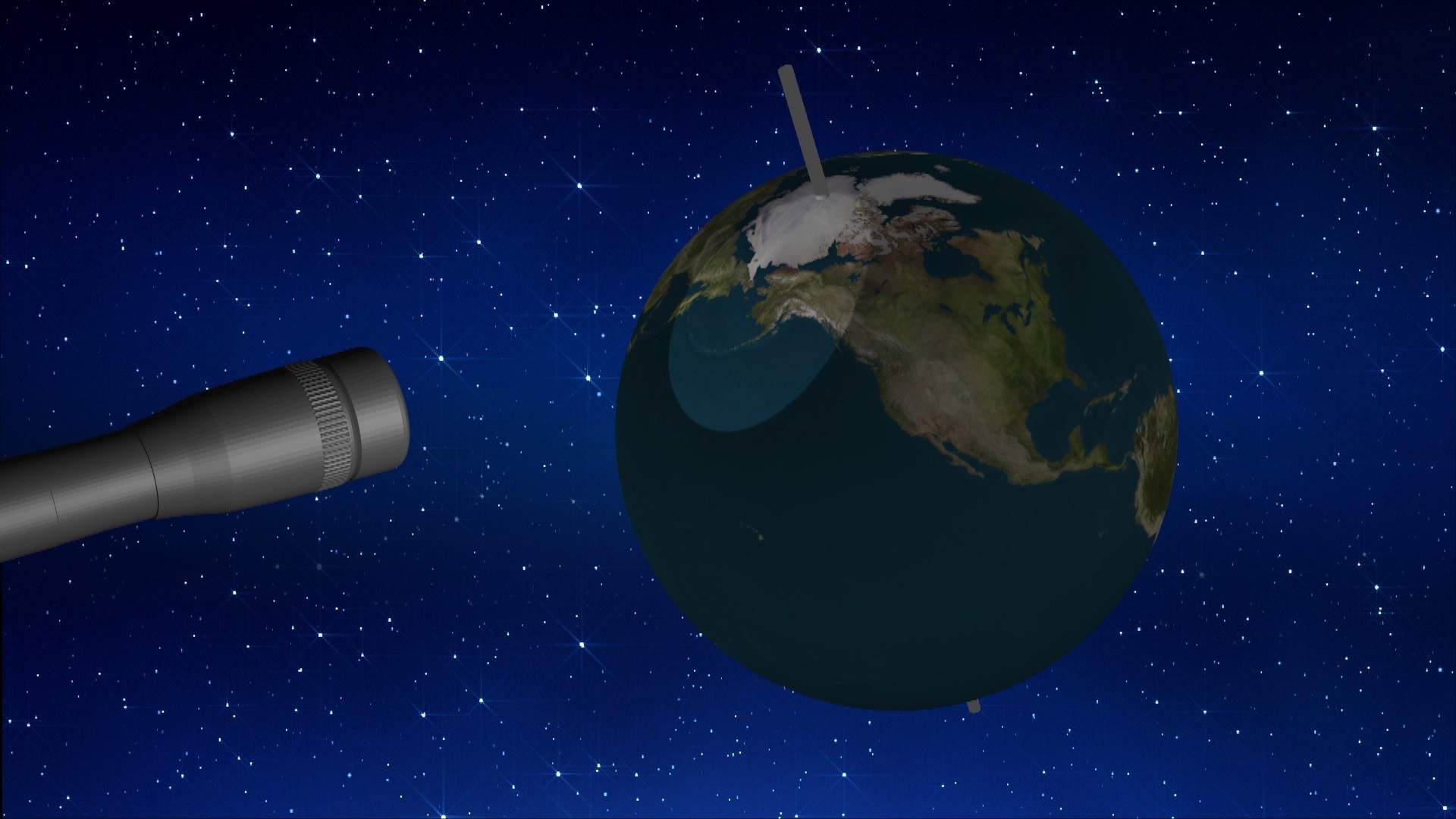
The reason we have different seasons on Earth is that the Earth is constantly leaning in the same direction in relation to the Sun, and that the Earth moves in an orbit around the Sun. It gets warmest where the sun's rays and heat energy hit straight on to the Earth's surface, and therefore on a smaller surface, and the heat decreases when spread out over a larger surface. In this film, you will learn how the seasons are related to the Earth's tilt in relation to the sun, and why at the equator it is about the same temperature all year round. You will learn that when the northern parts of the globe are mostly leaning in towards the Sun and the Sun is at its zenith over the Tropic of Cancer, we are in the North as the closest to the area that gets the most heat energy, and it gets warmer. And that when the northern parts of the globe tilt away from the sun and the sun is at its zenith over the Tropic of Capricorn, we in in the North are furthest away from the area that gets the most heat energy and it turns colder. Finally, you will learn that twice a year the Sun is at zenith above the Equator, once in the spring, and once in the autumn, and at that time the southern and northern hemispheres get an equal amount of the heat from the Sun.
Anledningen till att vi har olika årstider på jorden är att jorden hela tiden lutar åt samma håll i förhållande till solen, och att jorden rör sig i en bana kring solen. Det blir varmast där solstrålarna och värmeenergin träffar rakt mot jordytan, och därmed på en mindre yta, och det blir mindre varmt när de sprids ut på en större yta. I den här filmen får du lära dig hur årstiderna hänger ihop med jordens lutning i förhållande till solen, och varför det vid ekvatorn är ungefär samma temperatur året runt. Du får veta att när norra delarna av jordklotet som mest lutar in mot solen och solen står i zenit över den norra vändkretsen är vi Sverige som närmast det område som får mest värmeenergi, och vi får det varmare. Och att när norra delarna av jordklotet lutar bort från solen och solen står i zenit över den södra vändkretsen är vi i Sverige längst bort från det område som får mest värmeenergi och vi får det kallare. Slutligen får du veta att solen två gånger om året står i zenit över ekvatorn, första gången på våren, och andra gången på hösten, och då får södra och norra halvklotet lika mycket av solens värme.
Anledningen till att vi har olika årstider på jorden är att jorden hela tiden lutar åt samma håll i förhållande till solen, och att jorden rör sig i en bana kring solen. Det blir varmast där solstrålarna och värmeenergin träffar rakt mot jordytan, och därmed på en mindre yta, och det blir mindre varmt när de sprids ut på en större yta. I den här filmen får du lära dig hur årstiderna hänger ihop med jordens lutning i förhållande till solen, och varför det vid ekvatorn är ungefär samma temperatur året runt. Du får veta att när norra delarna av jordklotet som mest lutar in mot solen och solen står i zenit över den norra vändkretsen är vi Sverige som närmast det område som får mest värmeenergi, och vi får det varmare. Och att när norra delarna av jordklotet lutar bort från solen och solen står i zenit över den södra vändkretsen är vi i Sverige längst bort från det område som får mest värmeenergi och vi får det kallare. Slutligen får du veta att solen två gånger om året står i zenit över ekvatorn, första gången på våren, och andra gången på hösten, och då får södra och norra halvklotet lika mycket av solens värme.
- Sommaren
- Hösten
- Vintern
- Våren
- Årstiderna
- Årstidsväxlingar